
Category: Uncategorized

Hospice care, when talking about death helps to live with intention.

Hospice care, when talking about death helps to live with intention.

Most of us move through life believing death is something that happens to everyone else. Not us. Not yet. And if the moment ever comes, we will manage it somehow, staying strong and avoiding suffering at all costs.

How comfortable are we, really, talking about end-of-life care before we are forced to?

Then reality arrives, often suddenly.

Death touches us directly or reaches someone we love, and we are forced to face decisions we never wanted to make. We have to talk about what feels uncomfortable. We start thinking about the conversations we delayed and the plans we postponed, trusting there would always be a tomorrow.

This is where hospice care becomes deeply human.

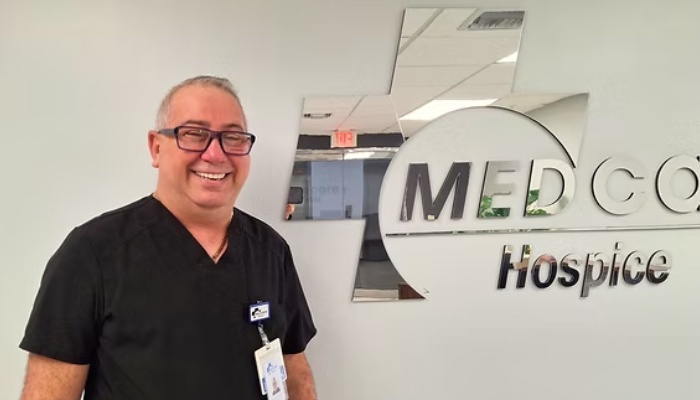
At Medcare Hospice, our teams walk alongside patients and families during one of life’s most vulnerable seasons. And when you speak with Geriolsys “Gio” Palenzuela, Patient Care Manager, you quickly understand why hospice work requires more than clinical skill.

Gio began working in hospice in 2017 after graduating from university in Puerto Rico. When asked why he chose this specialty, his answer is simple and honest:

“It’s a job that requires compassion. People who truly care about helping patients and their families navigate this stage of life.”
For Gio, this work has been one of the most meaningful experiences of his life. It has allowed him to guide families through what to expect medically while also providing emotional support when it is needed most. He has even been able to use that same knowledge and compassion to support friends and loved ones outside of work.
Hospice and palliative care are often misunderstood, but the goal is clear: comfort, dignity, and quality of life. The World Health Organization describes palliative care as an approach that improves the quality of life of patients and their families facing life-threatening illness. It focuses on preventing and relieving suffering through early identification, proper assessment, and treatment of pain and other physical, psychosocial, or spiritual concerns.
If you have never had palliative care explained to you, you are not alone.

Many families do not know which diagnoses qualify, how to access services, or what care looks like for a patient who is increasingly limited or bedridden. These are important questions, and they deserve clear, compassionate answers.

Talking about death does not bring it closer.

But talking about it can help families prepare, reduce fear, and make decisions aligned with the patient’s values. Stories like Gio’s remind us that even in difficult moments, there is always room for compassion, dignity, and human-centered care.

At Medcare Hospice, we are here to help patients live as comfortably and meaningfully as possible, every step of the way.


Fundamentals of Caring in Hospice Care

Hospice care is not about giving up. It is about showing up, differently. It focuses on comfort, dignity, and quality of life when time matters more than treatment. Families often ask, “What can I do at home?” The answer is simple and profound: a lot. You do not need to be a clinician to provide meaningful care. You just need guidance, presence, and permission to slow down.

This care guide is meant to help families and friends feel more confident, less overwhelmed, and better prepared to support someone receiving hospice care at home.

Comfort Comes First (Always)

Comfort is the cornerstone of hospice care. Small adjustments make a big difference.

What you can do:

  • Keep the patient positioned comfortably. Reposition every few hours if tolerated to prevent discomfort.
  • Use pillows to support the head, back, arms, and legs.
  • Adjust room temperature and lighting to what feels soothing, not what looks “normal.”
  • Reduce noise. Quiet is medicine.
  • Offer blankets, socks, or a cool cloth depending on preference.
If something seems off, trust your instincts and call the hospice team. Comfort issues are meant to be addressed, not endured.

Pain and Symptom Support (You Are Not Alone)

Pain, shortness of breath, anxiety, nausea, and restlessness are common. Hospice teams expect this and plan for it.
What you can do:
  • Give medications exactly as instructed. Do not wait until pain is severe.
  • Keep a simple log of symptoms and medication times.
  • Use non-medication comfort tools: gentle touch, calm reassurance, soft music, or guided breathing.
  • Notify the hospice nurse if symptoms are changing or not controlled.
You are not “bothering” anyone. Managing symptoms is the job.

Nourishment Without Pressure

As illness progresses, appetite naturally decreases. This is normal and not a failure of care.
What you can do:

  • Offer small amounts of favorite foods or drinks if the patient wants them.
  • Focus on comfort, not calories.
  • Keep lips and mouth moist with swabs, ice chips, or balm if allowed.
  • Let go of food rules. This is about pleasure and comfort, not nutrition goals.

Forcing food can cause distress. Listening matters more.

Hygiene and Dignity

Personal care can feel intimidating, but it is one of the most loving acts you can provide.

What you can do:

  • Assist with gentle bathing, oral care, and clean clothing or linens.
  • Maintain privacy. Explain what you are doing, even if the patient is less responsive.
  • Use gloves when appropriate and ask the hospice team to teach you safe techniques.
  • Watch for skin changes and report concerns early.

Dignity is preserved through respect, calmness, and communication.

Emotional and Spiritual Presence

You do not need the right words. You just need to be present.

What you can do:

  • Sit quietly. Hold a hand. Be there.
  • Listen more than you speak.
  • Encourage life review, memories, or meaningful conversations if the patient wants.
  • Allow emotions without fixing them. Sadness, fear, and peace can coexist.
  • Invite spiritual or cultural rituals that bring comfort.

Presence is often the most powerful care you give.

Supporting Yourself as a Caregiver

You matter too. Burnout helps no one.

What you can do:

  • Accept help. Say yes when people offer.
  • Take breaks. Sleep, eat, and step outside.
  • Ask questions until you understand.
  • Use the hospice team fully: nurses, aides, social workers, chaplains.

Caring for yourself is not selfish. It is necessary.

When to Call the Hospice Team

Call if:

  • Pain or symptoms are not controlled
  • Breathing changes suddenly
  • There is a fall or injury
  • You are unsure or scared

You do not need a perfect reason. Uncertainty is enough.

The Heart of Hospice Care

The Heart of Hospice Care
Hospice care is not about doing everything. It is about doing what matters most. Comfort. Connection. Dignity. Love.

Families and friends do not need to be experts. They need reassurance that their presence, their care, and their humanity are enough.

Honoring Women Caregivers

Honoring Women Caregivers: How Hospice Helps Share the Weight of Care

Every year on March 8, International Women’s Day invites Us to recognize the contributions women make in every area of society. Among these contributions, there is one that often remains invisible: caregiving. Throughout history, women have taken on a large share of caregiving responsibilities within families, supporting children, parents, partners, and loved ones through moments of illness, vulnerability, and dependency. When a loved one is facing a serious illness or the end of life, caregiving can become a deeply meaningful experience, but it can also be emotionally, physically, and mentally demanding. In this context, hospice services play a vital role by offering professional and compassionate support that helps families and especially women caregivers, avoid carrying the full weight of care alone.
In many families, when someone is living with an advanced illness, women are often the ones who step into the role of primary caregiver. Daughters, wives, sisters, and mothers frequently reorganize their daily lives to provide constant care, comfort, and support.

The Invisible Burden of Caregiving

This commitment can involve coordinating medical appointments, managing medications, assisting with daily activities, and providing emotional reassurance, all while continuing to manage work responsibilities and family life. Much of this labor happens quietly, often without recognition and with little time left for rest or self-care.
Over time, the demands of caregiving can lead to physical exhaustion, emotional stress, and feelings of isolation. Recognizing the essential work caregivers do (and ensuring they receive meaningful support) is an important step toward a more compassionate and sustainable approach to healthcare.

How Hospice Supports Caregivers

Hospice services are designed to support individuals facing serious illness and their families during the final stages of life. This model of care focuses not only on the patient, but also on the people who care for them.
Through an interdisciplinary team, which may include physicians, nurses, social workers, spiritual counselors, and trained volunteers, hospice provides comprehensive support that helps ease the burden families carry.
Caregivers receive guidance on how to manage care at home, emotional support as they navigate difficult moments, and the reassurance that a team of professionals is available to answer questions and provide assistance when needed. Hospice volunteers also play an important role by offering companionship and presence, giving caregivers opportunities to rest and recharge. This support improves not only the patient’s quality of life, but also the well-being of those who care for them every day.

A Model of Shared Care

Hospice does not replace the love and dedication of family members. Instead, it introduces a different way of experiencing care, one that is shared.

With the support of a hospice team, the responsibility of caregiving no longer rests entirely on one person. Caregivers can feel accompanied, supported, and understood. This often allows them to reconnect with their role as daughters, spouses, or friends, rather than carrying only the identity of caregiver.

Hospice care also creates space for meaningful conversations, moments of connection, and dignified goodbyes. It reminds us that caring at the end of life is, above all, an act of compassion and love.

Conclusion

On International Women’s Day, it is important to recognize the millions of women who quietly sustain the care of their families with dedication, patience, and love. Their work deserves visibility, support, and appreciation. Hospice services remind us that caregiving does not have to be a solitary journey. Asking for help, accepting support, and sharing the responsibility of care are also powerful ways of caring, for our loved ones and for ourselves.